Results Achieved in 2013 from the Project Funded by the “Bota” Foundation
From January 1 to December 22, 2013, the “Young Agronomists and Farmers Station” career guidance and educational program was implemented in Talgar, Almaty Region, with funding from the “Bota” Public Foundation.
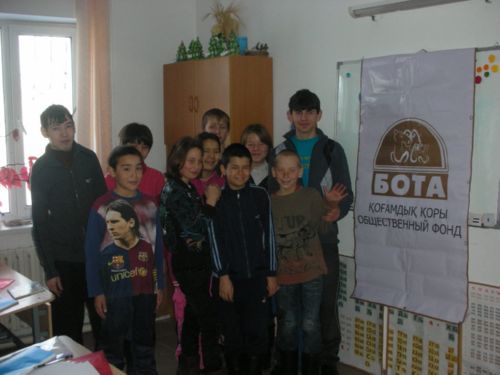
The project was based at the “Nur” Charitable Family Children’s Home. Five groups of 10 participants were formed, involving children from two non-governmental children’s homes: “Nur” and “Kovcheg.”
Over the course of the year, the children were introduced to new professions and developed practical skills that could help them make informed career choices in the future. Children growing up in residential care understand that their starting opportunities in adult life are more limited compared with those of children who have parents. For them, every opportunity to acquire a profession is a chance to build an independent future.
Project Results
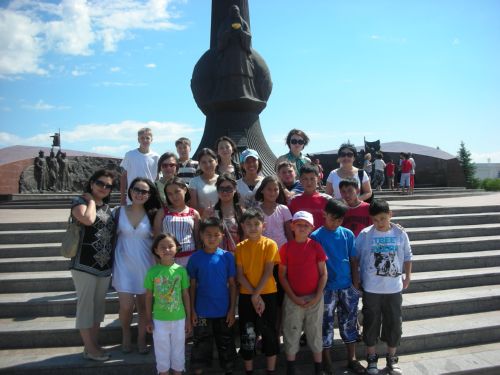
The “Nur” Charitable Family Children’s Home implemented a project aimed at developing the professional and creative skills of 50 children from two children’s homes — “Nur” and “Kovcheg” in Talgar.
Over 12 months, weekly classes were held in three areas: Farming, Agricultural Business, and Psychology. Upon completion of the training, the participants received certificates.
The “Nur” Charitable Family Children’s Home, together with the “Salauat” Medical and Biological Institute and the National Center for Healthy Nutrition, also organized 10 seminars on “Developing Healthy Eating Habits.”
As a result, 50 children from the “Nur” and “Kovcheg” children’s homes acquired basic knowledge of farming, agricultural business, communication and leadership psychology. These skills were intended to support their future employment, career choices, and admission to universities.
Project Objectives and Implementation
Objective 1
To train 50 children from the “Nur” and “Kovcheg” children’s homes in farming skills and agricultural technologies.
1.1. Soil science. Water and its role in the life of living organisms
1.2. Fruit growing and vegetable gardening
1.3. Basic rules for planning a garden plot. Fundamentals of plant variety selection
1.4. Eco-friendly production: growing fruit and vegetables without herbicides and pesticides
1.5. Installation of drip irrigation systems
1.6. Plant care and control of pests and plant diseases
1.7. Harvesting and post-harvest handling
1.8. Fundamentals of ornamental gardening
1.9. Growing plants and vegetables in protected environments
1.10. Examinations and certification
Results Achieved under Objective 1
1.1. 50 children, divided into five groups of 10, aged 12–21, attended two eight-hour classes. They learned about different types of soil, soil structure, the role of micronutrients in plant development, methods of identifying micronutrient deficiencies, ways to neutralize acidic and alkaline soils, methods of quickly restoring soil fertility in gardens, and the use of fertilizers.
1.2. 50 children, divided into five groups of 10, aged 12–21, attended two eight-hour classes. They learned the biological foundations of fruit growing, the structure of fruit and berry plants, stages in the life cycle of fruit and berry plants, periods of vegetation and dormancy, patterns of above-ground growth, root development and fruiting, as well as the relationship between fruit and berry plants and environmental conditions.
1.3. 50 children, divided into five groups of 10, aged 12–21, attended three eight-hour classes. They learned how to plan a plot of land, combine residential and garden areas, use geometric and natural methods for laying out a garden, divide a plot into functional areas, and understand the importance of plant varieties in fruit growing. They also studied major fruit, stone-fruit, and berry varieties, growing conditions, soil conditions, drainage, soil improvement, garden compost, digging, location, and climate.
1.4. 50 children, divided into five groups of 10, aged 12–21, attended four eight-hour classes. They became familiar with water-saving technologies, the causes of soil salinization, and the production of vermicompost.
1.5. 50 children, divided into five groups of 10, aged 12–21, attended four eight-hour classes. They learned about sprinkler and drip irrigation systems and ways these technologies can increase crop yields.
1.6. 50 children, divided into five groups of 10, aged 12–21, attended two eight-hour classes and learned to identify plant pests and diseases.
1.7. 50 children, divided into five groups of 10, aged 12–21, attended two eight-hour classes. They learned about preliminary crop assessment, harvest maturity, harvesting, post-harvest handling, berry cultivation, and processing berries into compotes, jams, preserves, juices, and beverages. They also studied methods and timing for collecting and drying leaves and berries, as well as berry-plant pests and diseases and methods of control.
1.8. 50 children, divided into five groups of 10, aged 12–21, attended two eight-hour classes. They learned about green spaces and their value, the basic elements of landscaping, and garden and park plantings.
1.9. 50 children, divided into five groups of 10, aged 12–21, attended two eight-hour classes. They learned about small polyethylene shelters, cold frames, and greenhouses.
1.10. 50 children, divided into five groups of 10, aged 12–21, attended two four-hour classes. Written examinations were conducted to assess the knowledge they had acquired, and certificates were awarded.
Practical Work and Results
- Seed preparation and planting: seeds were prepared for sowing and planted in peat pots, followed by seedling cultivation. 50 children, five groups of 10, attended five eight-hour practical sessions.
- Soil preparation: pre-sowing application of organic fertilizers and preparation of the plot. 50 children attended five eight-hour sessions.
- Planting seedlings: the cultivated seedlings were planted in prepared soil using moisture-conservation methods. 50 children attended five eight-hour sessions.
- Installation of drip irrigation systems: 50 children participated in 10 eight-hour practical sessions.
- Plant care: 50 children participated in five eight-hour sessions.
- Harvesting and processing: 50 children participated in five eight-hour sessions.
Objective 2
To conduct training seminars on the fundamentals of agribusiness, economic and financial literacy for 50 children from the “Nur” and “Kovcheg” children’s homes.
2.1. Introductory module. Introduction to agriculture and forms of agricultural business. Individual entrepreneurship in the form of a peasant/farm enterprise. Accounting and document management for individual entrepreneurs. Special tax regime for peasant/farm enterprises.
2.2. Types of obligations and liability of peasant/farm enterprises. Activities not covered by the special tax regime. Government programs supporting entrepreneurship in Kazakhstan. Public procurement as a source of financing. The Customs Union and agriculture. The WTO and agriculture. Foreign economic activity and how to participate in it. Licensing.
Results Achieved under Objective 2
2.1. 50 children, divided into five groups of 10, aged 12–21, attended five eight-hour classes. They learned about the specific features of operating an individual enterprise as a peasant/farm enterprise, as well as basic accounting and document management.
2.2. 50 children, divided into five groups of 10, aged 12–21, attended five eight-hour classes. They learned about government support programs, the Customs Union, and the WTO, and acquired basic knowledge of taxation, licensing, liability, public procurement, and foreign economic activity.
Objective 3
To conduct psychological training aimed at developing effective communication skills and leadership qualities among 50 children from the “Nur” and “Kovcheg” children’s homes.
3.1. “Fundamentals of Leadership” training.
3.2. Interactive training sessions aimed at developing teamwork and leadership skills.
3.3. Presentation of essential theoretical material on communication; practical methods and exercises for developing effective communication skills; feedback sessions.
3.4. Non-verbal communication skills. Strengthening group interaction skills. Developing leadership potential.
Results Achieved under Objective 3
3.1. 50 children, divided into five groups of 10, aged 12–21, attended two eight-hour classes. They studied major theories of leadership, leadership roles, leadership qualities, and the psychological and professional maturity of group members.
The training explored questions such as:
- How do people become leaders?
- Can leadership qualities be identified in childhood?
- Is it possible to be a leader without followers?
- How similar are the leaders we know?
3.2. 50 children, divided into five groups of 10, aged 12–21, attended two eight-hour classes and learned the advantages of solving problems as a team, as well as the importance of partnership and mutual support.
3.3. 50 children, divided into five groups of 10, aged 12–21, attended two eight-hour classes. The training focused on developing self-confidence and controlling aggression.
The children developed communication skills and a greater sense of tolerance. Challenges arose due to differences in participants’ ages, mentalities, and ethnic backgrounds. Some difficulties in learning and interaction were also associated with childhood psychological trauma.
3.4. 50 children, divided into five groups of 10, aged 12–21, attended two eight-hour classes. During the training, the children learned to convey information and emotional states through facial expressions, gestures, and movements, helping them better understand and manage emotional experiences.
The groups demonstrated greater cohesion and empathy toward other participants.
Leadership qualities became more flexible. During games and practical exercises, the children became more tolerant of the opinions and behavior of others.
The knowledge and skills acquired contributed to the development of their communication competence.
Feedback sessions revealed positive progress in the development of communication skills.
Additional Unplanned Activities
As part of its Healthy Lifestyle program, the “Salauat” Medical and Biological Institute conducted seminars on:
- Increasing personal responsibility for one’s health and developing a negative attitude toward smoking, alcohol, and drugs.
- Suicide prevention among adolescents.
Analysis of Results Achieved
The most significant results included:
- The children were introduced to the professions of farmer and agronomist.
- They acquired practical skills in modern agricultural technologies, including drip irrigation systems.
- The skills they acquired will help them make future career choices.
- All project objectives and goals were fully achieved.
- Overall, the project was implemented successfully, with only minor difficulties. These included the large volume of planned activities, as well as unforeseen circumstances such as plant diseases, insufficient irrigation water, and chlorine and other impurities in the water.
- This was our first experience implementing a grant project with the “Bota” Foundation. Although we encountered difficulties during implementation, the support of the “Bota” Foundation managers helped us overcome them successfully and provided us with valuable experience in implementing grant-funded projects.
- Having installed drip irrigation systems, we will be able to use them every year and continue improving the skills we acquired. We plan to help the children register individual enterprises for commercial activities. Together with the “Salauat” Medical and Biological Institute and the National Center for Healthy Nutrition, we also plan to organize seminars and conferences on a regular basis.
Conclusions
The “Bota” Public Foundation provides an opportunity to implement educational projects for children living in non-governmental children’s homes that do not receive government funding. We would like to have more opportunities to implement projects of this kind and hope to continue our cooperation with the “Bota” Foundation.
First, we learned how to work with grants. Second, we realized that the children are genuinely interested in acquiring new knowledge and practical skills. Third, we gained confidence in our ability to successfully implement grant-funded projects.