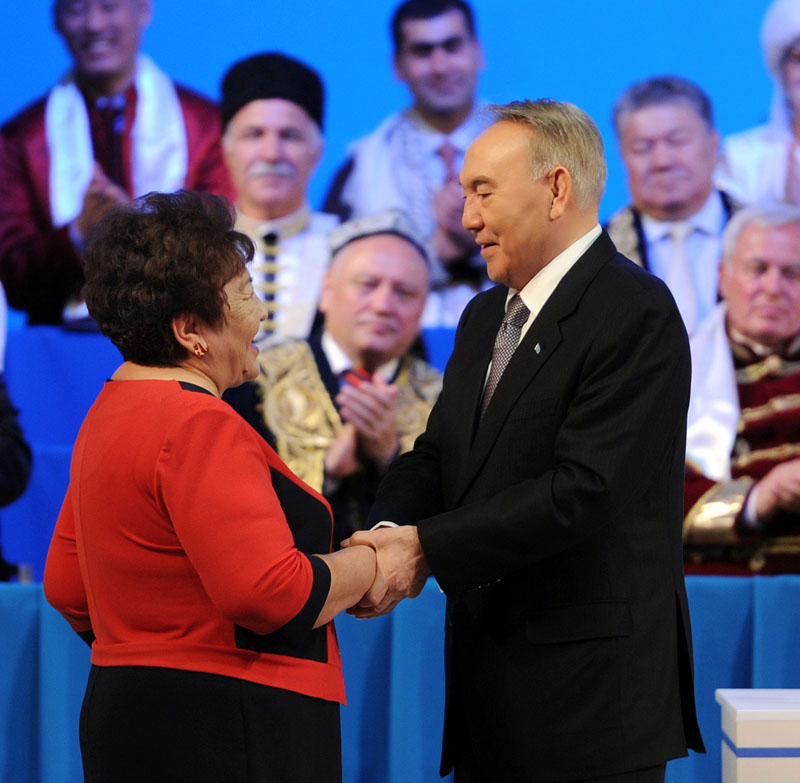
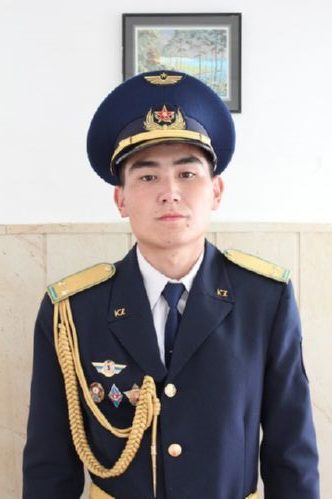
I don’t know why, but sometimes the closer you get to know certain people, the more you begin to distance yourself from them. Yet when you meet people with kind souls and hearts full of compassion, you find yourself eager to see them again. One such person is an ordinary Kazakh woman — a mother to some, a grandmother to others — Maria Haji.
There seems to be a quiet fragrance of faith and devotion about Maria apa. Her concern for her country, her native land, and her people is truly extraordinary. I came to know her well during the pilgrimage to Mecca — the Hajj, one of the five pillars of Islam. As our wise people say, if you want to truly know a person, travel with them.
On that journey, Maria apa came from Aktobe not alone. She brought two other people with her and paid for their expenses herself. Throughout the pilgrimage, as we offered prayers and made supplications for our homeland, our people, and our families, and fulfilled our religious duties, we gradually grew closer to one another.
During the journey, I noticed that Maria apa never sent away anyone asking for charity empty-handed. She never hesitated to help those around her in any way she could. She slaughtered an animal, prepared a generous dastarkhan, invited fellow pilgrims to share the meal, arranged for the Qur’an to be recited, and made sure to give gifts to those around her.
Having experienced orphanhood and widowhood from a young age, she was hardened by life’s hardships and grew into a woman who could face any difficulty with courage and overcome it with an unyielding strength of character that would be the envy of many men. The strength of her will and determination is a wonderful example for young women who struggle to carry the burden of responsibility and find themselves overwhelmed by even minor difficulties.
She entered the workforce at an early age and worked as an accountant until retirement. At the same time, she cared for both her mother-in-law and her own mother, raised four children, and did everything she could to provide them with opportunities to receive higher education. It is true that all of this was far from easy for one person.
As the saying goes, “Give me hardship in my youth and rest in my old age.” Our Haji mother raised her son, married off her daughters, and now enjoys the happiness of having grandchildren and great-grandchildren. She is especially proud of her son, Nurlan. The reason is simple: the son in whom she placed so much hope managed to live up to those expectations. After graduating from university, he remained in his native land, built his life there, endured both its hardships and its joys, and achieved distinction. This is what every parent hopes for from their children.
Even after fulfilling her financial religious obligation and returning home, and despite being of retirement age, she continues to help those around her and serve her people. She also shares the Islamic values she has learned. She heads the Muslim Girls and Women Department of the Association of Hajj Pilgrims of Kazakhstan in Aktobe Region.
In an effort to preserve the traditions, customs, and heritage that our nation has accumulated over many years, she works to instill human values and Islamic principles in women.
Whatever charitable initiatives are taking place in the Aktobe region, Maria Haji can usually be found there. Every year, she supports children from disadvantaged families in schools. She helps with the construction of mosques and mausoleums, brings people together, calls them to unity, and contributes to ensuring that projects that have been started are brought to completion. Such work is not something everyone is capable of.
I also know that she extended a helping hand to a madrasa in Turkistan, helping with the construction of its roof. And how much more has she done that we simply do not know about? In Islam there is a saying: “Let not your left hand know what your right hand gives.” The fact that Maria apa never publicizes or draws attention to the many things she has done is itself a wonderful example of true humility.
Another remarkable quality of this woman is the high value she places on our people’s art and the respect she shows to artists. Could a person who despises cruelty and has warmth in her heart fail to understand and appreciate art?
Whenever such outstanding sons and daughters of the Kazakh people and our national treasures as Roza Baglanova, Bibigul Tulegenova, Yermek Serkebayev, Yeskendir Khasangaliyev, Meiramgul Ilyasova, as well as many other celebrated artists and statesmen, visited Kandyagash, they never failed to stop by Maria apa’s home and taste her hospitality.
As respected people of the region, Maria apa and Nurlan’s home was always full of guests. As the Kazakh saying goes, “Be a bi, and if you cannot be a bi, at least be a house where a bi would come to visit.” Their home was never without guests.
During one of her visits to Almaty, Maria apa went several times with members of the Association of Hajj Pilgrims of Kazakhstan to the Nur Children’s Home in Talgar. After meeting the children, she invited Anuar aga and Tuyak apa — a respected family who were raising and educating around 300 children — together with their children and members of the Association of Hajj Pilgrims of Kazakhstan to visit the Aktobe region as her guests.
One warm summer day, Tuyak apa and the children, together with a group of pilgrims led by the chairman of the Association of Hajj Pilgrims of Kazakhstan, Yerkinbay Duanaev, set off for Aktobe. Along the way, we introduced the children to the vast expanses of the Kazakh land, and eventually arrived at Aktobe railway station. Maria Haji and her son Nurlan welcomed us with open arms.
Our two-day trip became one of the most interesting and memorable experiences in our lives, not only for the children but for the adults as well.
First, they took us to Kandyagash, where they lived. The first stop on our journey was the mosque to which Maria Haji had devoted many years of her efforts. After we finished our prayers and recitation of the Qur’an, Maria apa told us the history of the mosque.
Apparently, before the mosque was built, various disasters and misfortunes had repeatedly occurred in the town. After consulting with the village elders, she took on the task of building a mosque. Once the mosque was completed, the misfortunes seemed to recede. Many new jobs and mining operations appeared, and the lives of the local people gradually began to improve.
When the village authorities learned that guests had arrived, the village akim did not remain indifferent. A large feast was organized, the villagers were gathered at the cultural center, and a major cultural and spiritual evening entitled “Charity — the Path to Wisdom” was held.
At the end of the evening, we enjoyed performances by local amateur artists and dancers from the Nur Children’s Home. The audience listened to the pilgrims’ sermons and reflections, enjoyed songs and poetry, and left in high spirits, expressing their gratitude to Maria Haji.
The following day, we were taken to the burial sites of the heroic ancestors Kotibar Batyr and Aset Baba. We heard stories about how they had defended their people, shared a memorial meal, and recited prayers for the departed.
Our journey then continued with a visit to the orphanage in Alga. We were shown the children’s living conditions, watched a concert they had prepared, and learned more about their lives. We were especially impressed by the work of Maria apa’s assistant, the energetic and capable Sveta, who helped organize this part of our trip.
But Maria apa’s hospitality did not end there.
As we continued touring Aktobe, we could not pass by the magnificent Nur Gasyr Mosque, whose beauty could be seen from afar and which added a special charm to its surroundings. Apparently, they had also been informed of our arrival here. Several Aktobe entrepreneurs gathered, treated us to a meal, and there were many warm and heartfelt encounters.
We also visited the Nurdaulet Mosque and toured its complex. The children played to their hearts’ content on the playgrounds, while we were deeply touched by the boundless warmth and affection the adults showed toward them.
Our final stop in Aktobe was a summer recreation camp for children. Everywhere we went, we were received with great hospitality. Of course, it was clear that the respect and attention shown to us were largely a reflection of the great esteem these people had for Maria Haji.
Women like Tuyak apa and Maria apa — heroic mothers who, despite their own fatigue, have worked tirelessly all these years for the happiness of others and for the smiles of children — are truly exceptional people, worthy of our deepest respect and pride.
Their service to the people deserves to be written in golden letters in history.
I pray that God’s light will shine upon these heroic mothers who carry the sacred name of “Ana” — Mother with such dignity, and that they may be blessed with happiness in both this world and the hereafter.
Heroic Mothers of Kazakhstan
Author: Kalbibi Zholshykyzy
September 27, 2014