The “You Are Not Alone” Project: How the “Nur” Children’s Home Helps Preserve Families in 2026
A Mother’s Legacy: A Mission That Became a Life’s Work
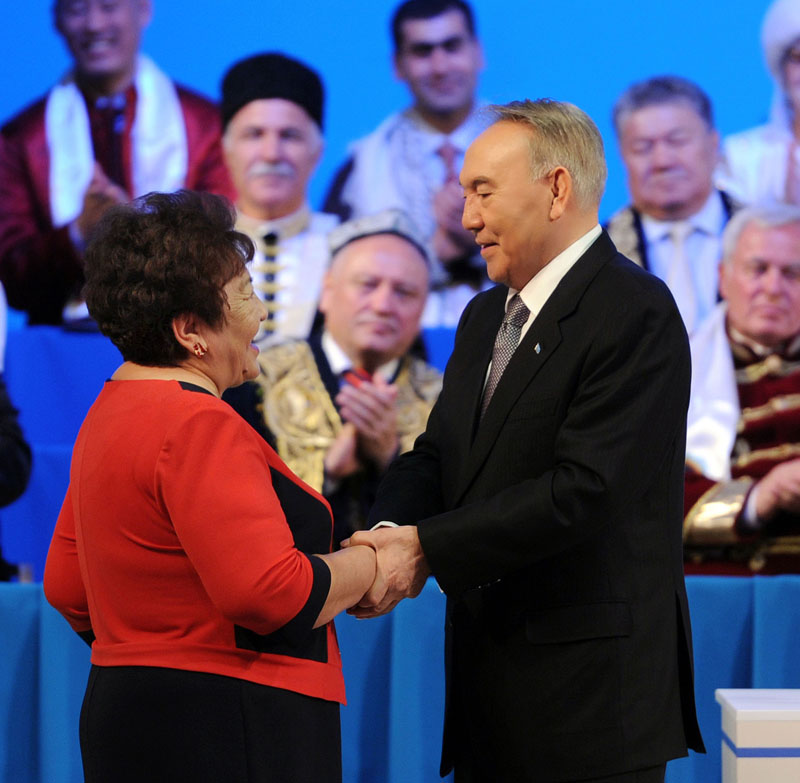
The story of the “Nur” charitable family children’s home is a chronicle of unprecedented compassion that began in 1998. Over 28 years of work, more than 750 children have passed through the warm hands of its founders. At its origins stood Tuyak Kazkenovna Eskozhina, whom hundreds of children simply called “Mama,” and her husband Anuarbek Baisarin. To save children left on the streets during the harsh 1990s, they made an extraordinary sacrifice — selling their own apartment in Almaty to fund the renovation of the building allocated to them.
The organization’s path was not easy: the couple first restored an old boarding school building (investing around $35,000), but later were forced to relocate and rebuild from ruins the current building — a former secondary school (No. 49) in Talgar.
Today, “Nur” is going through the most difficult and emotional moment in its history. On August 20, 2026, Tuyak-apai’s “golden heart” stopped beating. The founder’s passing has given the mission new meaning — it is now a matter of preserving her living legacy. In the realities of 2026, “Nur” is not just continuing its work — it is evolving, offering a solution to one of the most pressing problems of modern society: social orphanhood.
The “You Are Not Alone” Project: An Innovative Shield Against Social Orphanhood
The “You Are Not Alone” project is not a classic shelter, but a support model designed not to replace the family, but to save it. The innovation lies in the child’s five-day stay at the facility (Monday through Friday).
Key principles of the model:
Preserving parental rights: Unlike the institutional care system, no guardianship is established here and no children are removed from their parents. Parents remain the legal representatives.
Partnership with the family: The project is aimed at “motivated” parents who have fallen into crisis but are striving to overcome it. On weekends and holidays, children are always returned home.
Economic contribution: The project not only saves lives but also creates 21 jobs for qualified specialists in the Talgar district, providing professional care for the children.
The Socioeconomic Challenge: The “Vicious Cycle” of Survival
In 2026, many single parents in the Talgar district have found themselves trapped by circumstance. The numbers speak for themselves: the minimum wage in the region is 67,366 tenge. Meanwhile, even the most modest rental housing costs 50,000 tenge. Just to cover basic needs (food, clothing, hygiene) for one parent and two children requires a minimum of 250,000 tenge per month.
For a single mother or father, this becomes a daily battle for survival, leaving no strength or time for education or finding a better job. “Nur’s” philosophy offers them a “resource window” — a vitally important breathing space. While the children are safe and provided with everything they need, the parent gets a chance to get back on their feet, receive training, and break the cycle of poverty — all while maintaining their bond with the child.
An Ecosystem for Childhood: A Professional Approach to Care
“Nur” is a 2,200-sq.-meter facility with a full infrastructure for personal development. Thanks to years of support from benefactors, the institution is equipped to professional standards:
Guaranteed provision: Three meals a day, seasonal clothing, medical monitoring, and transport to school in a dedicated minibus.
Infrastructure for daily life: A professionally equipped kitchen with industrial ovens, a laundry room with industrial washing machines, a library, and a computer classroom.
Sports and leisure: A modern sports area with a soccer field, basketball and workout courts, and running tracks.
Here, a child doesn’t simply “wait out” their family’s hardships — they gain access to quality education and vocational upbringing.
The 2026 Renovation: A Fight for Safety
The building that has been home to hundreds of children was constructed in 1982. Over the past 20 years, due to a lack of government funding, no major renovation has been carried out, and the infrastructure has literally begun to fail. Today, government authorities are demanding the building be brought into immediate compliance with safety standards.
The building consists of four blocks, and management has decided on a phased restoration. The goal of Phase I: raise 13,000,000 tenge to reconstruct the first residential building, which houses 50 children.
Necessary work:
Complete replacement of the heating, plumbing, and electrical systems.
Facade insulation to eliminate critical heat loss.
Major repairs to bedrooms and bathrooms.
So far, only 19% (2,450,000 tenge) has been raised. Without completing this work, “Nur” will not be able to fully welcome new families, and the children risk losing their last stronghold of safety.
Transparency and the Right to Hope
The “Nur” family children’s home operates exclusively on private donations and receives no budget funding. The foundation of the organization’s trust is complete accountability. The “Reports” section of the website nur.org.kz publishes monthly official Kaspi bank statements, completed-work certificates, and all fiscal receipts.
Every contribution to the building’s reconstruction is more than just bricks and pipes. It is a chance for a child not to become a social orphan. It is a memory of Mama Tuyak-apai, who taught: “There is no such thing as someone else’s child.”
How to Help
The only thing separating the children from returning to the “Nur” home is the completion of the building renovation. Every donation brings this moment closer.
Secure transfer of charitable donations through Kaspi Bank JSC. Non-governmental institution Nur Charity Family Orphanage, BIN 981240015961.